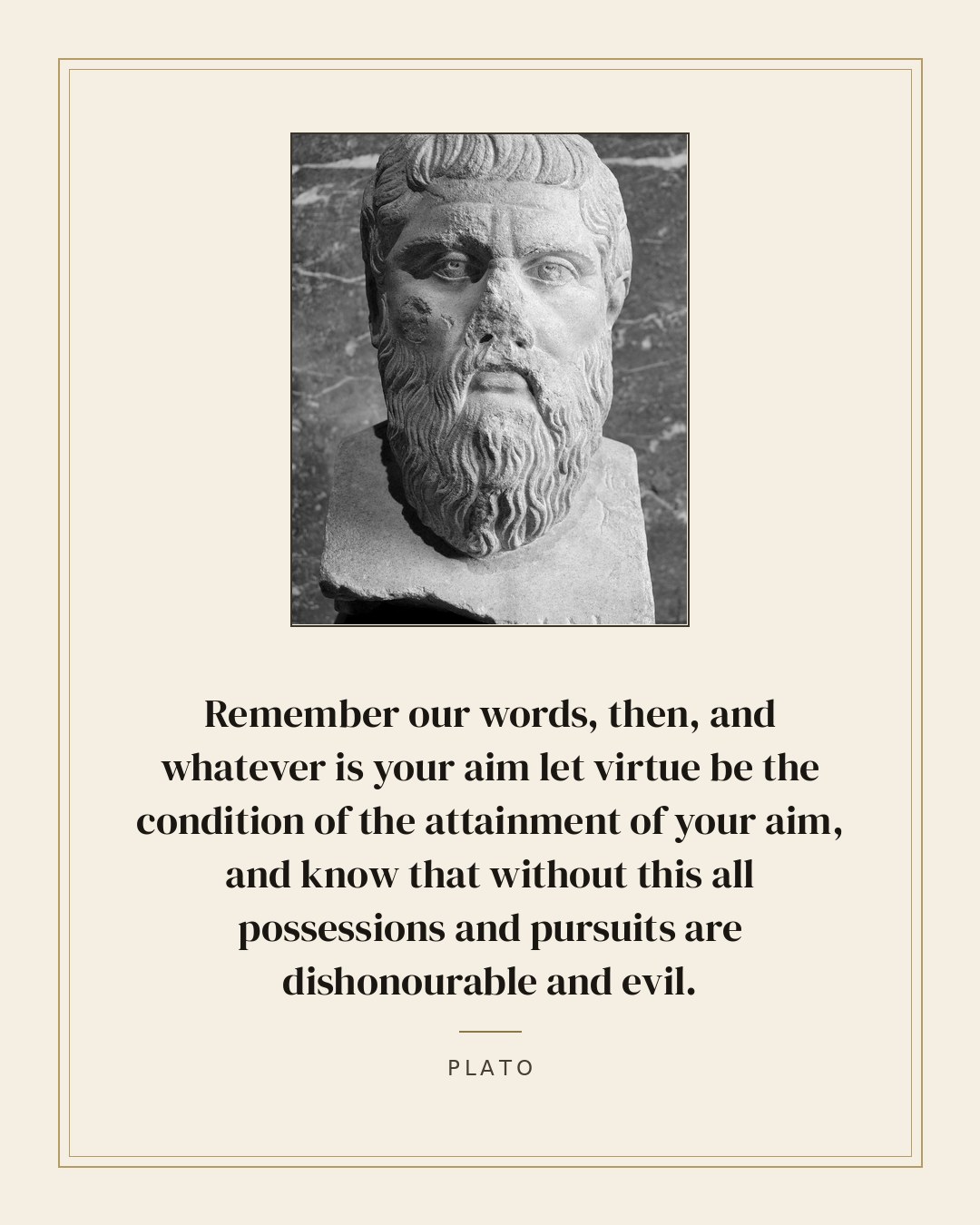
“Remember our words, then, and whatever is your aim let virtue be the condition of the attainment of your aim, and know that without this all possessions and pursuits are dishonourable and evil.”

— Plato · Wisdom quote

Remember our words, then, and whatever is your aim let virtue be the condition of the attainment of your aim, and know that without this all possessions and pursuits are dishonourable and evil. — Plato quote card
Philosopher · 428 BCE – 348 BCE

Greek philosopher, student of Socrates and author of The Republic.

More quotes by Plato · Browse all quotes on QuotePlace

Source: Menexenus · ✓ Source verified

More like this

Excess of liberty, whether it lies in state or individuals, seems only to pass into excess of slavery. — Plato
Excess of liberty, whether it lies in state or individuals, seems only to pass into excess of slavery.
Plato
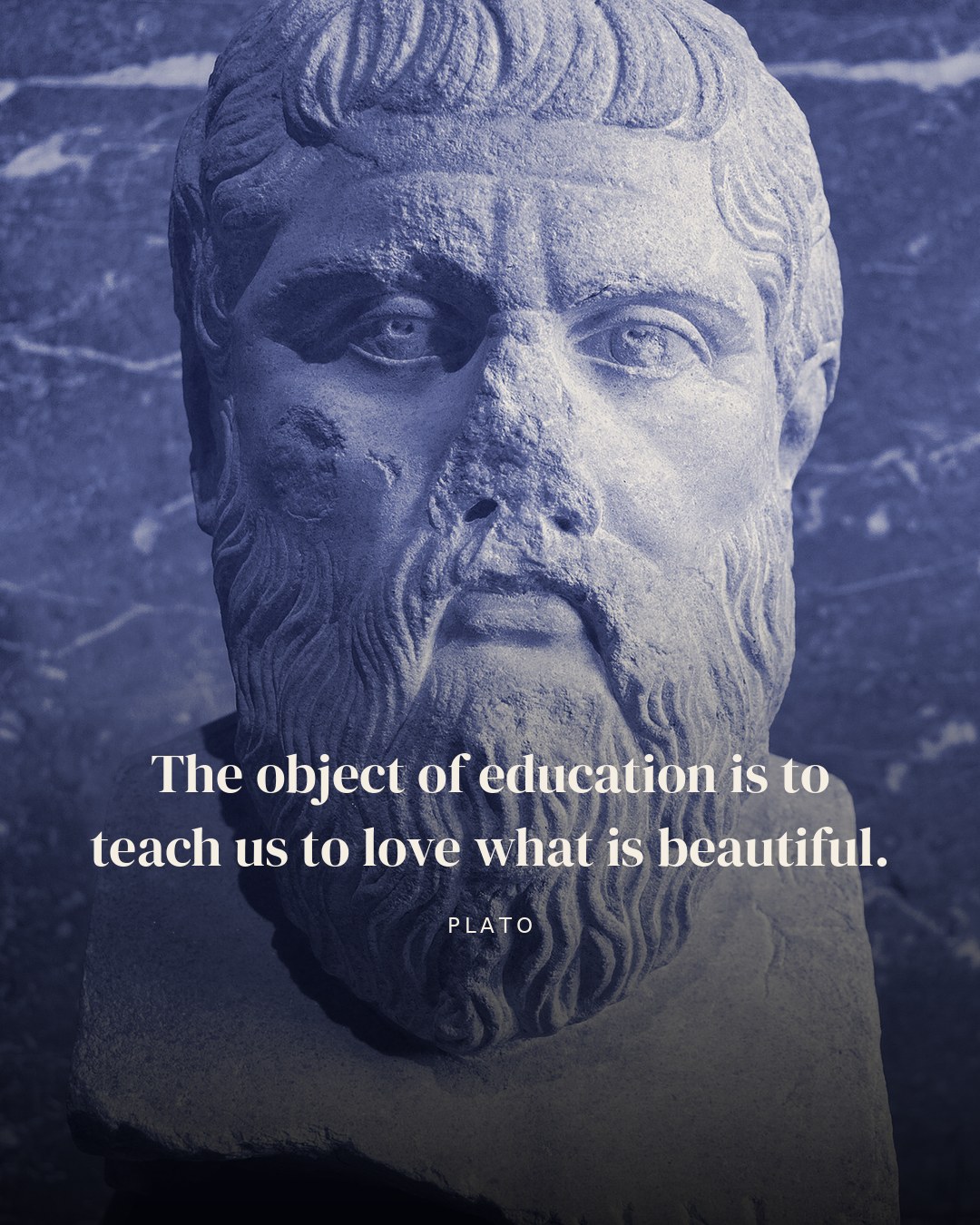
The object of education is to teach us to love what is beautiful. — Plato
The object of education is to teach us to love what is beautiful.
Plato
No one should be discouraged, Theaetetus, who can make constant progress, even though it be slow. — Plato
No one should be discouraged, Theaetetus, who can make constant progress, even though it be slow.
Plato
Justice means minding your own business and not meddling with other men's concerns. — Plato
Justice means minding your own business and not meddling with other men's concerns.
Plato
Isn't anyone who holds a true opinion without understanding like a blind man on the right road? — Plato
Isn't anyone who holds a true opinion without understanding like a blind man on the right road?
Plato
Thinking: the talking of the soul with itself. — Plato
Thinking: the talking of the soul with itself.
Plato
We must infer that all things are produced more plentifully and easily and of a better quality when one man does one thing which is natural to him and does it at the right time, and leaves other things. — Plato
We must infer that all things are produced more plentifully and easily and of a better quality when one man does one thing which is natural to him and does it at the right time, and leaves other things.
Plato